1/1
About the University
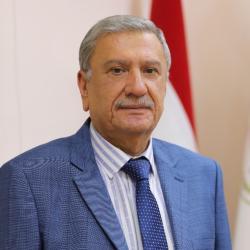
University President's Statement
Since its founding in 2004 AD / 1425 AH, Imam Jafar al-Sadiq (p) University has been considered one of the leading private universities in Iraq, through its major and continuous contribution to preparing and graduating batches of bachelor degree holders in its four colleges (Managerial and Financial Sciences, Information Technology, Arts, and the Law), as well as the University branches in (Diyala, Salah al-Din, Muthanna, Najaf, Maysan, Dhi Qar, and Kirkuk), to provide State departments and official institutions and the private sector with scientific and practical elites who are scientifically qualified to contribute to supporting the scientific and development process in our country within the educational and academic programs which are recognized by the Ministry of Higher Education and Scientific Research.
It is remarkable that the University has contributed to supplying graduate studies with a large number of its graduates who have completed their knowledge career in master's and doctorate degrees inside and outside the country, and with various scientific and humanitarian specializations.
As the global pandemic (Covid-19) spread, the University continued teaching its students in alternative ways and shifted the study from physical education to make it electronic. the websites were designed according to the instructions of the ministerial team for e-learning aimed at learning through a multi-platform (Google-meet) and electronic text files (pdf) by adopting the interactive education method through (power-point). Also, the global blended-learning approaches have been applied to departments of the scientific colleges that have practical and applied lessons, calling on students attend in specific days in the weekly lesson schedule, according to work requirements and the actual need to meet the requirements of the course and for all academic levels.
Imam Jaafar al-Sadiq (p) University was only dream, and today it has become a reality. It has graduated students who are competent in their practical field and have become among the illustrious names in society, among them are the storytellers and those who excelled in journalism, engineers and teachers, and whose work stations have varied in many ministries and state institutions.
The University looks forward to extend bridges of cultural and scientific cooperation by concluding scientific agreements and memoranda of understanding with local, regional and international universities and academic institutions to exchange teaching experiences and curricula and contribute to seminars and conferences. This is through a strategic vision to communicate with the outside world and enable the university and its scientific cadres to achieve its goals in the development, cross-fertilization and global experiences in the field of higher education and scientific research… Allah Grants Success
About the university
Our Vision
To become a leading University in education and applied scientific research through sustainable approaches that serve society, and to achieve a distinguished global position in terms of the quality of education, scientific research, and innovation.
Our Mission
To provide high-quality education and prepare graduates capable of competing globally, while advancing scientific research to serve society. Our University also seeks to offer a modern educational and research environment that keeps pace with scientific and technological developments, promotes digital transformation, and builds strong partnerships with labor market institutions and various sectors to translate research into practical solutions that benefit society.
Objectives:
Educational Level:
- Develop undergraduate and postgraduate curricula in line with global competitiveness standards.
- Adopt modern teaching methods that enhance interactive learning and encourage students’ research and creativity.
- Provide a safe and equitable learning environment with equal opportunities for all learners.
Scientific Research Level:
- Direct scientific research toward serving society and addressing local challenges.
- Publish research outputs in reputable international databases and journals.
- Encourage original and innovative research, promote applied research, and provide a supportive environment for inventions and patents.
Administration and Resources Level:
- Attract, qualify, and develop human resources in line with evolving work requirements.
- Enhance the university’s financial sustainability and increase its financial resources.
- Expand the use of digital technologies in education, research, and administration to achieve e-governance.
Community Service and International Relations Level:
- Strengthen community partnerships and entrepreneurship through applied research and community services.
- Activate international relations and enhance cooperation with external universities and institutions.
Quality Assurance and University Performance Level:
- Scientific departments strive to obtain program accreditation to ensure the quality and development of academic programs and systems.
The university and all its units seek to obtain institutional accreditation to compete with Iraqi and international universities and to improve its global ranking
Strategic Planning
Five-Year Plan Preparation Committee
|
Page |
subject |
Number |
|
|
Contents |
|
|
|
Word from the President of the University A |
|
|
|
A Word from the Assistant President of the University for Scientific Affairs |
|
|
|
A Word from the Assistant President of the University for Administrative Affairs |
|
|
|
Strategic Planning Axes |
|
|
|
First: The intellectual framework - Second: The vision - Third: The message |
|
|
|
Fourth: Core Values |
|
|
|
Fifth: Objectives of strategic planning |
|
|
|
Sixth: Strategic Planning Methods |
|
|
|
Seventh: Strategic Planning Evaluation Course |
|
|
|
Eighth: Strategic Governance System |
|
|
|
Ninth: Stages of preparing the plan |
|
|
|
Tenth: Analysis of the current situation of Imam Jaafar Al-Sadiq University |
|
|
|
Appendices
|
|
|
|
|
|
|
|
|
|
A word from the University President:
Praise be to God, Lord of the Worlds, and peace and blessings be upon our Prophet Muhammad and his pure and righteous family.
I am pleased to present to you today the outlines of our university strategy for the next six years (2025-2030), which we consider an ambitious roadmap befitting the stature of our esteemed university. It bears the name of one of the imams of knowledge and learning, Imam Ja'far al-Sadiq (peace be upon him), during whose era the school of knowledge opened to boundless horizons. This strategy has been formulated based on our steadfast vision.:
"Leadership in human development and excellence in knowledge production to serve society and humanity. Our strategy is based on four main pillars:
Pillar One: Academic and Educational Excellence, which includes:
1- Developing Curricula: Reviewing and developing all academic programs to align with future labor market needs, both locally and globally, with a focus on specialized fields and interdisciplinary programs.
2- Adopting Innovative Teaching Methods: Embracing blended learning and smart learning models, and developing laboratories and educational centers to create stimulating environments for creativity.
3- Enhancing Graduate Skills: Focusing on building personal and leadership skills, critical thinking and problem-solving skills, alongside specialized knowledge, to graduate students capable of competing and leading.
Pillar Two: Scientific Research and Innovation, which includes:
1- Directing Scientific Research: Stimulating targeted scientific research that serves sustainable development issues and provides solutions to local and global challenges in the fields of energy, environment, health, and technology.
2- Supporting Researchers: Providing financial and material support to distinguished researchers and establishing research centers of excellence in the university's strategic fields.
3- Knowledge Transfer: Enhancing cooperation with Public and private sector institutions should market research findings and innovations, transforming them into products and services with economic and social impact.
Third Axis: Community Service and Partnerships, which includes:
1- Strategic Partnerships: Building effective and sustainable partnerships with the industrial and service sectors to design training programs and projects that serve the community.
.
2- Sustainable Community Programs: Providing consultations, training programs, and awareness initiatives that meet community needs and are rooted in our Islamic and humanitarian values.
3- Promoting Social Responsibility: Instilling the values of community participation and volunteer work in our students and staff.
Fourth Axis: Infrastructure, Technology, and Localization:
1- Smart Campus: Developing the campus's technological infrastructure to be "smart" and connected, supporting modern learning and management systems.
2- Improving Facilities: Continuously improving and expanding educational, research, and service facilities to provide an environment conducive to creativity and excellence.
3- Enhancing Digital Presence: Developing the electronic portal and e-services to provide a distinguished and seamless experience for all university members and beneficiaries.
This strategy is the product of a collective effort, and its implementation will be a shared responsibility. It is not merely a document, but a pledge we make to move forward into the future with confidence and unwavering determination. We believe that our students are the ultimate goal of our investment and the fruit of our efforts, and that our faculty and staff are the cornerstone of achieving these aspirations. We look forward to Imam Jaafar Al-Sadiq University (peace be upon him) becoming, by 2030, a source of knowledge and a beacon of enlightened thought, contributing to building a knowledge economy and society, proud of its identity, open to the world, and inspired by the life of our Imam who filled the world with knowledge and wisdom.
And God is the source of all success.
Prof. Dr. Riyadh Khalil Ibrahim
President of Imam Jaafar Al-Sadiq University
A word from the Vice President for Academic Affairs:
Imam Ja'far al-Sadiq University (peace be upon him) adopts an ambitious educational and scientific project that transcends the traditional concept of a university. It seeks to establish a university model that combines authentic Islamic identity with scientific modernity, fostering productive and responsible thinkers, and balancing academic excellence with public service, drawing upon the life and rich scholarly legacy of Imam al-Sadiq (peace be upon him) as its guiding light and methodology.
Based on the vision of Imam Ja'far al-Sadiq University (peace be upon him), which states:
"Leadership in human development, and excellence in knowledge production, to serve society and humanity.
This vision revolves around three fundamental pillars:
1. Leadership in Human Development: Not just education, but building a well-rounded personality.
2. Excellence in Knowledge Production: Focusing on scientific research and innovation.
3. Community and Human Service: Making knowledge and research tools to serve society and all of humanity.
The university's mission is detailed in the text to explain how this vision will be achieved through:
1. Achieving leadership in human development by:
Providing a comprehensive and balanced education that nourishes the mind and fosters knowledge.
Refining character and skills.
Promoting authentic Islamic and human values.
The ultimate goal: Preparing innovative leaders and thinkers capable of contributing to the building of human civilization.
2. Committing to excellence in knowledge production by:
Encouraging rigorous scientific research and innovation.
Focusing on interdisciplinary research (integration between disciplines).
Linking scientific research to societal needs and contemporary challenges.
Contributing to the enrichment of human knowledge.
3. Embracing social responsibility by:
Utilizing scientific and intellectual resources to serve society and humanity.
Providing scientific and practical solutions to development issues.
Disseminating knowledge.
Building effective partnerships locally and globally.
The university draws inspiration from the scientific approach of Imam Ja'far al-Sadiq (peace be upon him), which was characterized by combining originality and innovation, wisdom and action. May God grant us success, and peace be upon you.
Dr. Fares Kamel Hassan
Assistant to the University President for Scientific Affairs
A word from the Vice President for Administrative Affairs:
In light of our university's inspiring vision of "Leadership in Human Development and Excellence in Knowledge Production to Serve Society and Humanity," our responsibility in the Administrative Affairs sector stems from a firm conviction that a stimulating environment and supportive infrastructure are the cornerstones for achieving these noble goals.
The university's mission of developing individuals through comprehensive education and achieving excellence in knowledge production through scientific research cannot be realized without an efficient administrative system that prioritizes:
1. Developing Individuals Administratively: by creating a stimulating and motivating university work environment that fosters creativity and a sense of belonging for all university members, and by investing in developing the capabilities of the administrative team to be an active partner in the educational and research process.
2. Enabling Knowledge Production: by providing advanced infrastructure and technology, overcoming all logistical obstacles, and empowering researchers and students with state-of-the-art facilities, laboratories, and libraries, thus supporting rigorous scientific research and innovation. 3. Community Service Through Logistical Support: Based on our social responsibility, the Administrative Sector works to build effective partnerships and organize resources to ensure the success of community service programs and provide logistical support that enables the university to offer practical solutions to development issues.
Inspired by the approach of Imam Ja'far al-Sadiq (peace be upon him), which combined authenticity and innovation, we strive to develop our administrative systems to be authentic in their principles, innovative in their methods, wise in their planning, and effective in their performance.
In Administrative Affairs, we do not see ourselves merely as service providers, but as partners in shaping the vision and contributors to building a human civilization by providing a nurturing environment for knowledge and scholars.
May God grant us success...
Dr. A.M.D.Amer Sadiq Al-Mallah
Assistant to the University President for Administrative Affairs
Strategic Planning Pillars at the University:
The university's strategic methodology is based on a set of key pillars that form the framework for planning, implementation, and evaluation processes. These pillars include:
First: The Intellectual Pillar:
The university derives its intellectual orientation from the approach of Imam Ja'far al-Sadiq (peace be upon him), which combined authenticity and innovation, and balanced wisdom and action, to establish a comprehensive scientific and ethical model that contributes to human development, knowledge advancement, and community service.
Second: The Vision:
To be a leader in human development and excel in knowledge production to serve society and humanity.
To be a leader in education and applied scientific research in sustainable ways to serve society and achieve a prestigious global standing in terms of the quality of education, scientific research, and innovation.
Third: The Mission:
To provide high-quality education and prepare graduates capable of competing globally, to develop scientific research to serve society, to provide an advanced educational and research environment that keeps pace with scientific and technological developments and promotes digital transformation, in addition to building strong partnerships with various institutions and sectors to translate research into scientific solutions and serve society.
Fourth: Core Values:
1. Authenticity and Innovation: Combining Islamic principles and authentic values with creativity and keeping pace with modernity.
2. Human Integration: Developing the individual intellectually, spiritually, morally, and skillfully.
3. Quality and Excellence: Commitment to quality standards in education, research, and outcomes.
4. Community Service: Contributing to development and fulfilling social responsibility.
5. Wisdom and Action: Transforming knowledge into practical solutions that have a real-world impact.
Fifth: Main Strategic Objectives:
1. Building the Well-rounded Individual:
1. Developing a comprehensive educational model that balances knowledge, skills, and values.
2.1. Designing programs and activities to develop leadership qualities and strengthen Islamic and human identity.
3.1. Preparing creative graduates and effective leaders capable of contributing to building civilization.
2. Excellence in Knowledge Production and Scientific Research:
1.2. Supporting rigorous and innovative scientific research, especially in interdisciplinary fields.
2.2. Focus on applied research that addresses societal needs.
3.2. Establish specialized research centers that contribute to enriching human knowledge.
3. Community service and development.:
1-3. Utilizing academic capabilities to serve the community and provide scientific consultations.
2-3. Contributing to solving national development challenges.
3-3. Building effective strategic partnerships locally and internationally.
4. Leadership and Institutional Development:
1-4. Updating the organizational structure and administrative environment to achieve efficiency and effectiveness.
2-4. Ensuring quality in all academic and administrative processes.
3-4. Developing an integrated system for planning, monitoring, and continuous performance evaluation.
5. Financial Sustainability:
1-5. Diversifying funding sources and activating academic and knowledge-based investment.
2-5. Enhancing the efficiency of managing material and human resources.
3-5. Building a sustainable financial model that supports the university's independence.
Sixth: Strategic Planning Methods:
1.Values-Based Planning
Drawing inspiration from Imam al-Sadiq's (peace be upon him) approach of combining authenticity and innovation as a foundation for strategic guidance and ensuring that decisions align with Islamic and human values.
2. Scenario Planning
Developing multiple future visions for education and scientific research and anticipating potential challenges with flexible approaches.
3. SWOT Analysis
Analyzing the internal and external environment to identify strengths, weaknesses, opportunities, and threats to support strategic decision-making.
4. Balanced Scorecard
Monitoring performance across four pillars:
a. Financial Sustainability
b. Student and Community Satisfaction
c. Quality of Academic and Administrative Processes
d. Staff Development and Continuous Innovation
5. Participatory Planning
Involving all stakeholders – faculty, administrators, students, alumni, and the community – through workshops, committees, and participatory surveys.
6. Results-Based Planning:
Linking activities to targeted outputs, such as human development, knowledge production, and community service, using measurable Key Performance Indicators (KPIs).
7. Matrix Planning:
Aligning strategic objectives with organizational units, timelines, and human and financial resources within precise implementation matrices.
8. Integrated Planning:
Integrating the university's academic, research, financial, and human resource plans within a unified and coherent framework, under the supervision of multidisciplinary planning committees.
9. Agile Planning:
Implementing short, periodic (quarterly) reviews and updating plans based on new developments, ensuring continuous improvement and adaptation to change.
10. Evidence-Based Planning:
Making strategic decisions based on data, statistical analyses, feasibility studies, and benchmarking.
Seventh: The Strategic Planning Cycle:
1. Strategic Analysis: Diagnosing the current situation and identifying influential variables..
2. Strategic Formulation: Defining the vision, mission, values, and objectives.
3. Strategic Implementation: Translating plans into actionable work programs.
4. Monitoring and Evaluation: Measuring performance, analyzing deviations, and taking corrective actions.
Eighth: Strategic Governance System:
The Higher Committee for Strategic Planning to oversee public policies.
Sub-planning units in colleges and departments to coordinate implementation.
A system of periodic reports to monitor progress and analyze performance.
Corrective mechanisms to ensure continuous improvement in institutional performance.
Ninth: Stages of Plan Preparation:
1. Preparation and Establishment Stage: Forming planning teams, defining the intellectual framework, and establishing the timeline.
2. Analysis and Diagnosis Stage: Studying the internal and external environment and identifying community needs.
3. Formulation and Planning Stage: Defining the vision, mission, values, strategic axes, and performance indicators.
4. Implementation and Follow-up Stage: Preparing implementation programs, distributing tasks, and monitoring progress.
5. Evaluation and Development Stage: Reviewing results, analyzing deviations, and updating plans according to the principle of continuous improvement.
Tenth: Analysis of the Current Situation of Imam Ja'far al-Sadiq University (peace be upon him)
1- Internal Environment Analysis
The following is a detailed analysis of internal environmental factors according to the dimensions of Inclusive Internal Analysis (IFEM), as follows:
|
Distance |
Sub-dimensions |
Strength |
Weakness |
Proposed treatment |
|
Academic dimension |
Faculty competence
|
The university boasts a distinguished faculty of professors holding doctoral degrees and advanced degrees, possessing extensive academic and research experience.
The faculty members are characterized by their diverse academic backgrounds and specializations, fostering scientific integration and exchange. Knowledge within the institution.
The teaching staff possesses a high level of competence and academic excellence, with distinguished scientific experience compared to competing institutions.
Some academic programs have received official accreditation from the Ministry of Higher Education and Scientific Research, reflecting a commitment to national quality standards.
The college is committed to continuously updating its curricula. My role is aligned with evolving knowledge and the demands of the local and regional labor market.
The curriculum includes practical and field-based skills that contribute to developing students' practical abilities and enhance their professional readiness.
The teaching process utilizes reliable academic resources through twinning and collaboration programs with parent public universities. The faculty members have published scholarly work in peer-reviewed local and international journals indexed in Scopus, which enhances the university's presence in the international academic community and contributes to raising its research standing. The university administration allocates an annual budget to support faculty members. Scientific research and encouragemen o development projects Academic.
Faculty members are encouraged to publish scholarly work and participate in specialized conferences and seminars.
The university maintains strong relationships with several Iraqi universities through scientific collaboration and participation in joint committees.
The university actively participates in conferences and events academy Nationally this strengthens its institutional presence.
It makes continuous efforts to build strategic partnerships with universities and academic institutions worldwide, with the aim of exchanging expertise and developing academic and research programs.. |
The university faces a few challenges that affect the efficiency of its academic and administrative performance, most notably the high turnover rate of teaching staff holding academic titles (assistant lecturer and lecturer), as a result of appointment decisions to government positions issued by the Federal Civil Service Council,
The weak stability of academic staff within private universities affects the sustainability of expertise. Educational and research. Some academic programs have not yet received programmatic accreditation from the Ministry of Higher Education and Scientific Research, while the accreditation renewal process in some colleges is experiencing significant delays. This limits the university's ability to update and develop curricula in accordance with national and international quality standards and accreditation requirements.
Clarifying the difference Between permission and accreditation, there is a permission to approve. The initial opening by the Ministry allows the program to begin teaching.
Academic accreditation is a comprehensive evaluation of the program's quality and its conformity to established official standards, and it is granted after all requirements are met.
Some curricula suffer from shortcomings in their alignment with the demands of the local and regional labor market, which weakens graduates' employment opportunities.This affects the attractiveness of academic programs to students. There is also a relative decline in enrollment in some departments and colleges due to the limited number of available specializations or weak academic promotion of the programs. Furthermore, the university still lacks joint or dual-degree academic programs with Local or foreign universities, which reduces opportunities for academic openness and international cooperation in education. Scientific research.
Some curricula suffer from a failure to keep pace with modern developments and labor market demands, as they still lack the practical skills and knowledge that graduates need to integrate effectively into various work environments. This necessitates a periodic review and updating of the curriculum to align with market needs and future trends. |
Striving to align employment benefits in the private sector with those in the public sector, with the aim of reducing the brain drain of academic talent and achieving greater job stability in private universities. Establishing academic accreditation committees within the university to coordinate With the Ministry of Higher Education Supervisory Authority The academic calendar is reviewed, and the college monitors the accreditation requirements for each study program according to national and international standards. Specialized committees are formed to develop curricula in each college according to its academic specializations, as follows: 1. Conducting periodic studies of local and regional labor market needs to identify required skills. The competencies required of graduates and their connection to learning outcomes 1. In the academic programs. 2. Regularly update the curricula to ensure their alignment with economic and technological developments and the requirements of the production and service sectors. 3. Involve representatives from the public and private sectors (such as chambers of commerce and industry, oil and gas companies, and banks).In curriculum development committees to introduce the applied and professional dimension into the scientific content. |
|
Accreditation of academic programs
|
||||
|
Curriculum and its update
|
||||
|
Quality of published research and support provided
|
||||
|
Academic relations
|
||||
|
|
||||
|
Administrative and organizational dimension |
Organizational structure and its effectiveness
|
A formal organizational structure with a clear distribution of tasks and responsibilities.
Organizing committees and academic councils contribute to decision-making.
Relatively flexible interaction between administrative and academic departments.
A senior leadership with a clear vision. Regarding university development:
Work is being carried out in accordance with quality standards and institutional accreditation.
Some academic staff are being involved in administrative decision-making.
Essential electronic systems, such as the student registration system, are in place. Some administrative departments are adhering to precise deadlines and achieving specific goals. Electronic systems are being partially implemented for human resources and financial management.
A commitment-based organizational culture is being fostered. Religious and ethical values.
Commitment to attendance and discipline within the colleges.
Mutual respect among the teaching staff .and the administrator.
|
The need to develop precise and written job descriptions that clearly define the responsibilities and tasks for each administrative and academic position, thereby contributing to increased institutional performance.
The necessity of enhancing the effectiveness of the middle management structure through empowerment.Department heads and assistant deans are tasked with fulfilling their leadership role in supporting academic and administrative decision-making.
|
The university works to establish its vision and mission in clear and attractive displays. These are displayed in prominent locations within the university, ensuring they are visible to students, staff, and visitors, and contributing to raising awareness of them. And to promote belonging, values, and goals It representuniversity
|
|
Level of governance and leadership |
||||
|
Efficiency of administrative systems
|
||||
|
Organization and level of discipline
|
||||
|
Student dimension |
Number and diversity of students
|
A significant increase in numbers Students are admitted annually, with a relative balance in gender representation, reflecting an inclusive and open learning environment.
The cultural and social diversity of students from different governorates fosters a spirit of openness and academic interaction.
Faculty members are highly regarded and respected by students for their distinctive teaching methods.Flexible and effective communication.
The presence of direct communication channels between students and professors in departments contributes to fostering a supportive learning environment.
Effective flexibility in organizing class schedules and exams, taking into account students' circumstances. It ensures academic discipline.
Activating the Student Affairs Department to fulfill its role in addressing student needs. Students' academic and social needs, and providing them with the necessary support.
|
The need to activate student exchange programs Hosting students from international universities enhances academic openness and cultural diversity.
Limited efforts to attract international students from outside the local environment to enrich educational experience and develop the university environment.
The need to revitalize disciplines with low enrollment through continuous curriculum updates and alignment with labor market demands..
Strengthening channels Student participation in providing opinions and suggestions related to improving the educational process.
Developing a regular mechanism for measuring student satisfaction and analyzing their feedback to ensure continuous improvement in the quality of university services.
Improving infrastructure. Technical infrastructure. Increased access to internet services on campus to support digital learning. Development of career guidance programs and employment services to support students and graduates in their future career paths.
|
|
|
Student satisfaction with the educational process
|
||||
|
Level of academic achievement
|
||||
|
Student Services
|
||||
|
Financial dimension |
Financial sustainability and sources of funding |
Relatively stable financial reliance on tuition fees.
Relative stability in cash flow throughout the academic year.
The university's ability to cover basic operating expenses.
The presence of some additional funding sources (such as internal investments).
Having a dedicated financial management department to manage the budget and issue financial reports.
Adherence to accounting and control procedures.
Prudent spending to prevent uncontrolled expansion.
Offering discounts to academically outstanding students or those in financial need.
Availability of tuition payment plans in certain cases.
Provision of limited internal scholarships supported by benefactors..
Construction of fully owned university facilities, not leased ones.
Significant improvements to classrooms and laboratories. Provision of some basic educational equipment (projectors, computer labs, etc.). Investment in the construction of new colleges or the expansion of the campus.
|
Near-total reliance on tuition fees as the sole source of funding.
Lack of ongoing training for the financial management staff on best practices..
Lack of coordination with external organizations or entities to provide grants.
Absence of cooperative programs (such as "study and work") that help students cover their expenses.
Delays in implementing development projects due to limited funding..
|
Addressing the Ministry of Higher Education and Scientific Research to explore the possibility of including private universities in its policies regarding scholarships and fellowships for international students, thereby contributing to enhancing the international presence of private universities and supporting their academic programs with cultural and intellectual diversity.. The call to organize sports and cultural festivals aims to enhance the university's presence and activate its community role by harnessing students' creative energies in the fields of scientific, artistic, and athletic excellence, thereby contributing to the development of their skills and fostering a spirit of positive competition and belonging to the university. It is necessary to begin diversifying university revenue streams by launching multi-faceted investments that contribute to enhancing the university's financial sustainability and developing its service and educational environment. These initiatives include: 1-Establishing currency exchange offices on campus to provide safe and fast financial services to students and affiliates, thereby boosting local economic activity and providing a stable financial resource for the university. 2-Establishing modern gyms to encourage students to engage in physical activities and generate revenue from memberships and sports services, thereby promoting public health and a culture of fitness. 3-Opening restaurants and cafes specializing in fast and modern cuisine within a well-organized university environment, to meet students' daily needs and add a continuous source of income that enhances the university's operational resources.. 4-These projects aim to transform the university into a productive institution, capable of self-financing a portion of its development and research programs, and to establish the concept of sustainable academic investment that links education with economic developmen |
|
Efficiency in managing financial resources |
||||
|
Scholarships, discounts, and financial aid for students |
||||
|
The size of investment in infrastructure and education
|
||||
|
Infrastructure and Technology |
Classrooms, laboratories, and equipment
|
Sufficient classrooms are available to accommodate the current student body.
The classrooms are equipped with projectors and interactive whiteboards.
Computer labs and labs for core science disciplines are available in some colleges.
Basic amenities (such as furniture, air conditioning, and lighting) are provided.
A dedicated online portal is available for students to register for courses and view grades.
Internet service is available on campus at relatively acceptable speeds.
Blended and online learning is implemented. During emergencies (such as pandemics).
Using university email or online platforms for academic communication.
Some departments have branch libraries within the colleges (especially in Sharia or Law colleges).
A central university library serves both students and faculty..
Security guards are present at the university gates around the clock.
Surveillance systems (cameras) are in place throughout the university facilities.
Entry and exit procedures are in place for students and visitors. Full adherence to health and safety protocols during crises (such as COVID-19).
|
A heavy reliance on older print books without diversifying digital resources.
A lack of partnerships with other university libraries or global databases.
|
5. Implementing an Enterprise Resource Planning (ERP) system to manage administrative, financial, and academic affairs.
6. Organizing training workshops for faculty and administrative staff on using digital systems.
7. Monitoring e-transformation indicators within the annual performance reports of each college and unit. |
|
Digital infrastructure education management systems, internet
|
||||
|
University Library and Educational Resources
|
||||
|
Security and safety
|
||||
|
Community relations and employment |
University reputation in the job market
|
The university enjoys an active and influential presence in academic and religious circles both within and outside Iraq, which enhances stakeholder confidence and reinforces its image as a reputable academic institution.
The university's relatively long history grants it institutional stability and increasing credibility compared to newer private universities. A number of the university's graduates hold prestigious positions in both public and private institutions, reflecting the quality of its educational outcomes.
The excellent reputation of the university's colleges contributes to enhancing the value of the academic degree among government agencies and employers. Graduates of certain applied disciplines, such as media, law, accounting, management, and oil and gas economics, have successfully integrated into the job market, working in media outlets, law firms, and well-known production companies.
The fact that a number of students find employment during their studies or immediately after graduation, without prolonged periods of unemployment, demonstrates the alignment of academic programs with market demands. Fruitful cooperation with media institutions enhances the university's media presence and strengthens its connection to the professional and community environment.
Conducting training courses within the university in partnership with specialized professional bodies.
Organizing lectures and workshops in collaboration with institutions outside the university. The existence of informal relationships between some professors and local employers.
Organizing public events with a humanitarian focus (such as seminars on domestic violence, human rights, professional ethics, counter-terrorism, drug control, and domestic violence).
Positive participation in national and religious events and occasions that foster a sense of belonging and social responsibility.
|
• Some employers perceive private education as lower quality, which may affect the job market's evaluation of private university graduates.
• There is a lack of regular official studies or surveys monitoring graduates' employment rates and job opportunities.
• The scarcity of recruitment events and weak direct communication with employers and relevant organizations in the labor market.
• The absence of formally signed Memoranda of Understanding (MoUs) with the public and private sectors to facilitate employment opportunities.
• Limited collaboration with for-profit private sector companies, such as commercial enterprises, banks, and technology companies, which reduces opportunities for practical partnerships.
• The lack of involvement of professional bodies or employers in the design or periodic review of academic programs weakens their alignment with market demands.
• Limited opportunities for paid or long-term internships within companies and institutions reduce students' practical experience.
• The absence of the concept of a "productive and community-oriented university" in implementation plans limits the university's developmental and economic role.
|
1. Establishing specialized consulting offices in each of the university's colleges to provide academic and research services to the community and institutions, thereby enhancing the university's developmental and professional role.
2. It is also proposed to establish an office dedicated to following up with graduates and searching for job opportunities in various disciplines, with the aim of facilitating their integration into the labor market and strengthening ties between the university and governmental and private employers.
|
|
Graduate employment rate
|
||||
|
Partnerships with industry and the private sector
|
||||
|
social responsibility
|
||||
|
Marketing and corporate reputation |
Effectiveness of marketing strategies.
|
The university enjoys good acceptance among conservative social segments thanks to its religious and cultural affiliation.
The annual enrollment rate is relatively high, indicating the effectiveness of traditional marketing.
The university participates in educational university fairs within Iraq.
The university enjoys a positive image among academic circles and religious, cultural, and scientific elites. The university's discipline and conservative policies foster trust among parents from traditional backgrounds.
The university maintains a consistent, albeit limited, presence at international and regional scientific conferences.
The university fosters friendly relations between its faculty and students.
Some graduates remain loyal to the university and promote it within their personal circles. Increased student satisfaction across all colleges |
Lack of targeted online marketing campaigns.
No analysis of marketing efforts.
No professional use of social media.
No regular student satisfaction surveys to analyze results and improve services. Weak university communication with graduates (no active alumni association).
|
|
|
The university's image in the local and international community.
|
||||
|
Student and graduate satisfaction.
|
Table No. (1)
2- External Environment Analysis
Table No. (2)
presents a detailed analysis of external environmental factors according to the PESTEL framework, as follows::
|
Distance |
Opportunities |
threats |
|
Political |
Government support for expanding private education.
A strategic approach to reducing unemployment through education.
Laws permitting the establishment of private universities under clear conditions.
Encouraging public-private partnerships.
A move towards closer ties with regional and international educational institutions.
Integrating education into national development plans.
Flexibility in admissions policies.
A drive to improve the quality of national higher education.
|
Bureaucracy and weak governance in education.
Excessive oversight and centralized procedures.
Sudden changes in admissions and registration decisions.
Short and ill-considered actions (such as closing colleges or withdrawing accreditation).
Imposing restrictions on recruiting foreign professors or international talent.
|
|
Economic |
High demand for higher education.
Growing middle class in many governorates. Investment opportunities in the private education sector. Diversification of income sources. Reliance on self-financing instead of government funding. High investment potential. Emphasis on entrepreneurship and practical skills. Transition to a digital economy and blended learning. Rapid progress in infrastructure and projects.
|
Lack of government financial support or educational loans. High operating costs. Fluctuating exchange rate of the Iraqi dinar. Reduced government spending on the private education sector. Intense competition among private universities. Reliance on tuition fees alone for funding. Regional and international economic fluctuations.. |
|
social |
Increased public awareness of the importance of higher education.
High population growth and a large youth population.
A shift in perceptions of private universities.
Widespread participation of women in higher education. Increasing social acceptance of modern academic disciplines. The spread of evening and continuing education programs. A relative improvement in academic achievement rates in some governorates. The role of private universities as cultural and social centers. Societal acceptance of the principle of paying for quality education. The expansion and development of urban areas.
|
The social gap between classes. Social discrimination between graduates of private and public universities. Overcrowding in the job market in certain fields. Family pressure to choose a major. A "degree only" culture instead of skills. The prevalence of a "pay-to-succeed" mentality..
|
|
Technological |
The global shift towards e-learning.
Availability of learning management systems (LMS) technologies.
Partnerships with global educational technology companies.
Increased internet and smartphone usage among youth.
Availability of advanced educational simulation programs. Opportunities in modern technological fields. Potential for developing local digital content. Leveraging artificial intelligence to support the educational process. Transition to smart university management.
|
A shortage of qualified technical staff.
Resistance to change from some academic staff.
Weak cybersecurity systems in some university systems.
The high cost of a complete digital transformation.
Challenges in updating curricula to keep pace with technology.
Increasing reliance on artificial intelligence tools in a non-academic manner. Lack of preparedness among administrative staff to handle modern systems. Slow internet speeds and weak network coverage on campus.. |
|
environmental |
The potential for excellence through the transformation into a "green university."
A global and local focus on sustainability.
The introduction of new environmental programs and specializations. Opportunities for collaboration with international and local environmental organizations. Opportunities for international funding and support for university environmental projects. The design of environmental vocational training programs for students and graduates. The utilization of solar and thermal energy as alternative energy sources. The integration of green education principles into the curriculum. Engagement with national environmental issues.
|
Frequent power and water outages.
High energy consumption without alternatives. Lack of environmental awareness among students and administrators. Weak or nonexistent environmental emergency plans. The impact of droughts on residential areas and universities. The absence of sustainable architectural design.
|
|
Legal |
Improved legislation and regulations.
Greater autonomy and transparent governance.
Enhanced recognition and certification.
Guaranteed rights for staff and faculty. Legal protection against arbitrary oversight or sudden changes. Opportunities for urban and structural expansion. A legal transition period allows time for planning and adaptation. Better legal regulation of admissions and centralized application processes. Academic reforms and regulatory proposals. Opportunities to enhance university reputation through compliance with laws. Attracting investments and legal partnerships.
|
The need for strict compliance and rigorous legal enforcement.
The legal and financial costs associated with compliance.
Ambiguity in some legal texts or political values within the law.
New legal requirements that increase the regulatory burden.
Unified standards in curriculum and examinations.
|